PLUGIN FOR CLAUDE CODE & CODEX

Merged PRs, while you're doing something else.

An AI agent team that automates your open-source contributions — it picks the GitHub issue, builds the fix, scores its own PR, and iterates until a maintainer would merge it.

curl -fsSL https://raw.githubusercontent.com/gaurav0107/superhuman/main/install.sh | bash
★ Star on GitHub
superhuman — /contribute · run #12
unattended
ISSUE-SELECTOR
Issue picked
#23015 · ranked from 23
REPO-PROFILER
Conventions learned
from 120 merged PRs
PLANNER
Plan approved
scoped to one fix
BUILDER
Fix + tests green
allowlisted CI only
SCORER
62%
merge probability · weakest dimension → fixed
Merged #23015
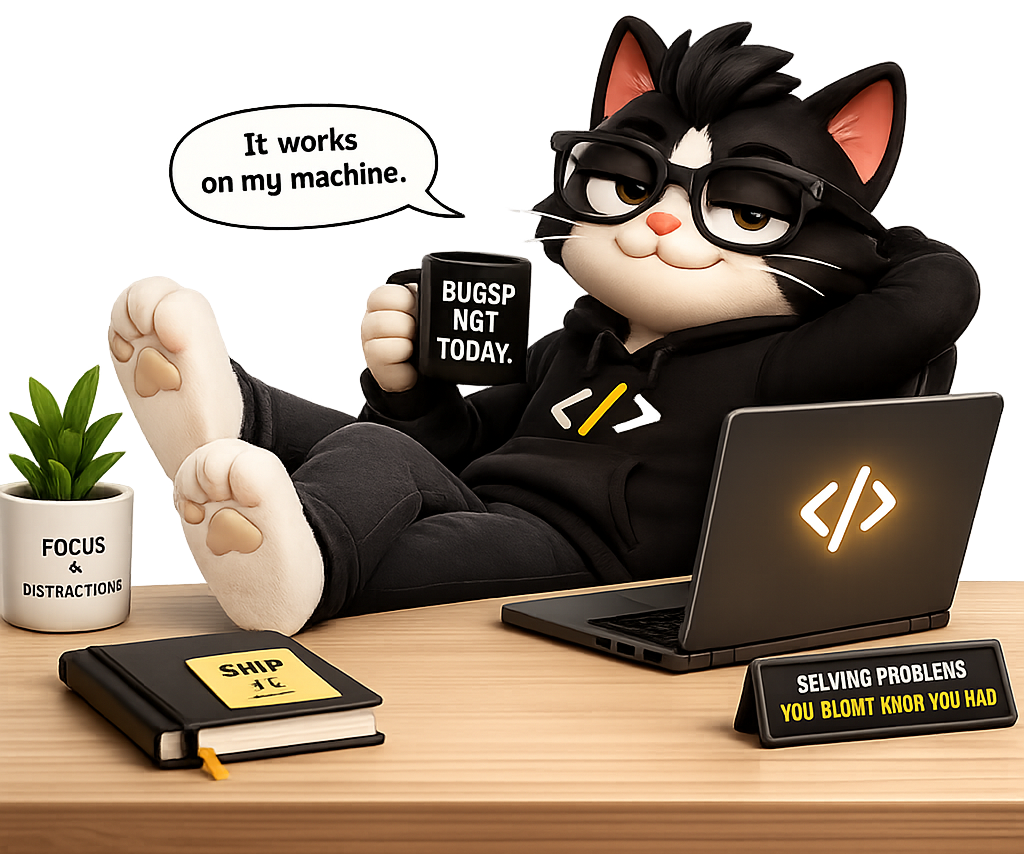
The superhuman mascot — a tuxedo cat with glasses leaning back with its feet on the desk, coffee in paw, saying: it works on my machine
iterating
PROVEN

Merged into repos it doesn't own.

huggingface/transformers#45611 #45611 Clear error for single-label classification with num_labels=1 Python apache/airflow#65685 #65685 Honor AUTH_ROLE_PUBLIC in the FastAPI API server Python oxc-project/oxc#23015 #23015 Attribute-aware implicit roles in the jsx-a11y lint rule Rust ant-design/ant-design#58241 #58241 Apply labelStyle/contentStyle to bordered Descriptions cells TypeScript Lightning-AI/pytorch-lightning#21686 #21686 Fix torch.compile breaking toggle_optimizer Python tesseract-ocr/tesseract#4563 #4563 Fix crash when LSTM is missing in a disabled-legacy build C++

Plus merges into llama_index, mem0, langchain4j, lima, LibreChat, and mocha.

THE LOOP

Closed loop. Not open loop.

Open-loop tools generate once and hope. superhuman grades its own work before a maintainer ever sees it.

01
Score

A 10-dimension rubric grades the PR like a maintainer would.

02
Target

The single weakest dimension. Nothing else.

03
Fix

Routed to the matching language specialist.

04
Repeat

Until 95% merge probability — two runs in a row.

every outcome → merge_outcomes.jsonl → a sharper prior for the next repo

INSTALL

Two commands. Then walk away.

CLAUDE CODE
# installs superhuman + dependencies
curl -fsSL https://raw.githubusercontent.com/gaurav0107/superhuman/main/install.sh | bash
CODEX
# install the skill
curl -fsSL https://raw.githubusercontent.com/gaurav0107/superhuman/main/install.sh | bash
# then: "use the superhuman skill to contribute"

Needs gh (authenticated), git, jq · Forks only, --force-with-lease · MIT licensed

HOW TO USE

Installed. Now put it to work.

In Claude Code, these are slash commands. Type one and walk away — the agent team takes it from there.

01
Find repos worth contributing to

Builds a ranked shortlist of repositories and the best open issue in each. Optional — /contribute will pick for you if you skip it.

/repo-finder
02
Make one contribution

Picks the top repo and issue, then runs the full loop to a merge-ready PR. Aim it yourself with /contribute owner/repo or /contribute owner/repo 12345.

/contribute
03
Run several, unattended

Several contributions in one run — /contribute-loop works through them one after another, /contribution-fleet runs them in parallel across different repos.

/contribute-loop 5
/contribution-fleet 3
04
Watch it work

A live view of the active run, its score history, and every merge outcome so far.

/contribution-dashboard

On OpenAI Codex there are no slash commands — just tell Codex "use the superhuman skill to contribute."

FAQ

Questions, before you walk away.

What is superhuman?
superhuman is a free, open-source (MIT) plugin for Claude Code and OpenAI Codex that autonomously contributes to open-source projects. An agent team picks a GitHub issue, learns the repository's conventions from its merged PRs, writes the fix with tests, and scores its own pull request on a 10-dimension rubric — iterating until it reaches roughly 95% merge-probability. It has already landed merged PRs in projects like Hugging Face Transformers, Apache Airflow, and Ant Design.
How is it different from Copilot, Cursor, Devin, or SWE-agent?
Most AI coding tools are open-loop: they generate a change once and hope it's good. superhuman is closed-loop — it grades its own PR against a maintainer-style rubric and keeps fixing the single weakest dimension until the PR would actually merge. That self-scoring gate is why its pull requests are built to be accepted, rather than added to the pile of unreviewed "AI slop."
Is it safe — won't it spam maintainers with low-quality PRs?
Safety is the core design goal. superhuman only opens a pull request after its scorer estimates roughly 95% merge-probability two runs in a row, so maintainers see finished work, not noise. It works on forks only, pushes with --force-with-lease, runs only allowlisted CI commands, and is MIT-licensed and fully auditable. It's built to be the opposite of the automated PR spam that pushed GitHub to add pull-request limits in 2026.
Does it work with OpenAI Codex, or only Claude Code?
Both. A single install script (curl -fsSL https://raw.githubusercontent.com/gaurav0107/superhuman/main/install.sh | bash) sets up superhuman and its dependencies for Claude Code. In Codex you symlink the skill into ~/.codex/skills and tell Codex to "use the superhuman skill to contribute." The same agent workflow runs on either harness.
Will it grow my GitHub contribution graph?
Yes. Every fix superhuman lands is a real open-source contribution — a merged pull request under your own GitHub account — so it shows up on your GitHub contribution graph like any commit you author by hand. Instead of chasing green squares, you accumulate genuine merged PRs in respected repositories while you work on something else.
Is it free? What does it cost to run?
superhuman itself is free and open-source under the MIT license. You only pay for your own model usage through Claude Code or Codex — there is no separate subscription, seat, or API of its own.
What do I need to get started?
You need the gh CLI (authenticated), git, and jq. In Claude Code, first install the superpowers plugin (a prerequisite), then add the superhuman marketplace and install the plugin — two commands, then it runs unattended. Full commands are in the Install section above.